Monteverdi: Vespro della Beata Vergine, 1610
Jill Gomez, Felicity Palmer, James Bowman, Robert Tear, Philip Langridge, John Shirley-Quirk and Michael Rippon
Monteverdi Choir and Orchestra; Salisbury Cathedral Boys’ Choir; Philip Jones Brass Ensemble; David Munrow Recorder Ensemble
John Eliot Gardiner, conductor
Decca 443 482-2 — 2 CDs
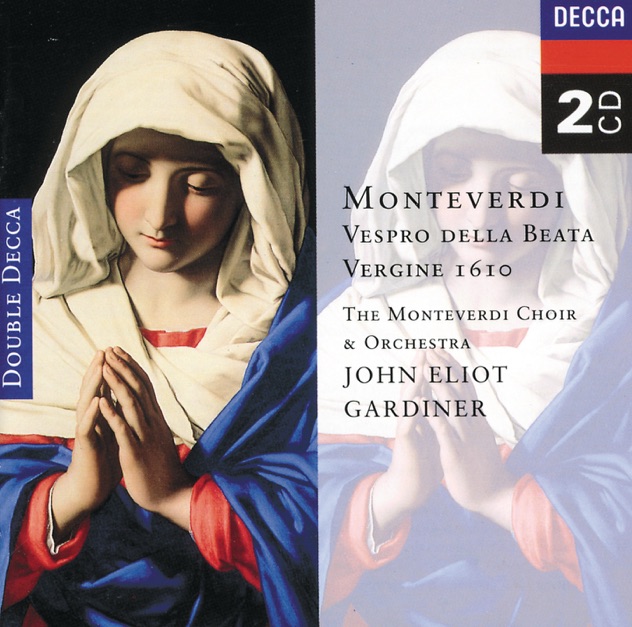
Made in 1974, this was John Eliot Gardiner’s first recording of Monteverdi’s Vespers. It predates his later period-instrument version and naturally sounds heavier and more conventionally orchestral. That does not make it dull. Gardiner already understood the work’s theatrical contrasts, its rhythmic vitality and its ability to move almost instantaneously from private devotion to magnificent public ceremony.
The opening fanfare has tremendous brilliance, helped immeasurably by the Philip Jones Brass Ensemble, and the larger choral movements possess real weight without becoming sluggish. The Monteverdi Choir sings with youthful energy, while the Salisbury boys bring a welcome freshness to the upper lines. The distinguished soloists include some of the finest British singers of the period. James Bowman is characteristically expressive, and Robert Tear, Philip Langridge and John Shirley-Quirk give the solo passages both clarity and dramatic personality.
Listeners accustomed to leaner modern performances may occasionally find the textures thick and the phrasing less flexible than we now expect. Even so, the performance’s confidence and sheer vitality remain highly persuasive. Gardiner treats the Vespers as a living dramatic work rather than a reverential historical monument.
The generous second disc adds sacred works by Giovanni Gabrieli and Giovanni Bassano, together with Monteverdi’s Exultent caeli. The Gabrieli motets are particularly effective, allowing the combined singers and brass players to fill the music with ceremonial grandeur. As a mid-price Double Decca set, this remains an exceptionally rewarding account: not the last word in historical authenticity, perhaps, but a vivid and exciting performance that has worn its years remarkably well.
The exact edition, 1974 recording details and supplementary works were verified against the Double Decca catalogue listing and Presto’s recording entry.


