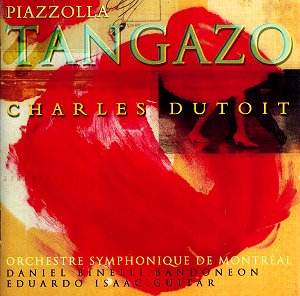
Piazzolla: Orchestral Works
Daniel Binelli, bandoneon; Eduardo Isaac, guitar; Louise Pellerin, piano; Orchestre Symphonique de Montreal/Charles Dutoit
Decca 468 528–2 [75:47]
Dutoit’s Montreal forces bring us Piazzolla in full orchestral dress—and the results are both seductive and problematic. This is tango nuevo as concert music, scrubbed clean of the brothel smoke and waterfront grit that clung to the original idiom. Whether that’s a virtue or a loss depends entirely on what you’re seeking from this repertoire.
The opening of Adiós Nonino, with its rasping percussion and unsettled harmonies, suggests something harder-edged than what follows. Written in 1959 as an elegy for the composer’s father—killed in a street accident—this 1981 orchestral version eventually settles into a rather too comfortable nostalgia. The Montreal strings are gorgeous, yes, but perhaps too refined. One misses the bite, that visceral catch in the throat that the best bandoneonists bring to this music. Daniel Binelli plays with obvious affection and technical command, though his instrument gets swallowed occasionally in Dutoit’s plush orchestral textures.
Milonga del ángel fares better. Here the slower tempo and atmospheric writing—all those gossamer string effects and shadowy woodwind colors—suit the orchestra’s temperament perfectly. This is chamber music writ large, and the Montreal players understand how to shape these sinuous melodic lines without overplaying the sensuality. Dutoit knows when to pull back.
The Double Concerto for Bandoneon and Guitar presents fascinating textural challenges. Binelli and Eduardo Isaac work well together, though Isaac’s guitar—recorded rather closely—sometimes projects with uncomfortable prominence. The opening movement’s introspective quality comes across beautifully, but the final tango movement wants more rhythmic snap, more danger. These are civilized tangos, drawing-room dances rather than the real thing.
But then we reach Tres movimientos tanguísticos porteños, and suddenly everything clicks. This purely orchestral work—no bandoneon to ground us in tango orthodoxy—allows Piazzolla’s genuine compositional gifts to emerge. The first movement’s furtive opening, with its chromatic slides and dissonant harmonies, leads into music of genuine imagination. There’s Stravinsky here, certainly, and perhaps Bartók in those driving rhythmic patterns, but filtered through an Argentine sensibility that never quite lets you forget the dance at its core.
The central Moderato builds tension masterfully—Dutoit understands how to control these gradual accelerations, never forcing the tempo. And that final Vivace, with its fugal episodes and bold timpani punctuation, makes a convincing case for Piazzolla as more than a gifted melodist. This is sophisticated compositional thinking, and the Montreal orchestra plays it with the kind of precision and ensemble discipline that reveals the music’s architecture.
Oblivion offers another highlight: the oboe’s plaintive line against those luscious string harmonies creates genuine pathos. The bandoneon commentary weaves through the texture with touching restraint—Binelli knows when not to play, which matters as much as his considerable mastery.
Danza criolla erupts with welcome abandon after all this carefully calibrated atmosphere. Here finally is some genuine wildness, some rhythmic exuberance that doesn’t feel calculated. The orchestration sparkles.
The title work, Tangazo, presents Piazzolla at his most ambitious—a substantial piece that alternates between tragic intensity and infectious high spirits. The slow sections risk sentimentality but mostly avoid it through sheer melodic strength. When the dance rhythms kick in, the Montreal players respond with infectious energy, though one still wishes for a bit more edge, a touch more of that dangerous quality that distinguishes great tango from merely competent dance music.
The disc, made in Montreal’s Église St-Eustache, provides ample space and warmth—perhaps too much of both. The acoustic flatters the strings but sometimes blurs rhythmic definition. Those timpani rolls in the final movement of Tres movimientos need more impact, more physical presence.
This disc will please listeners who want Piazzolla’s melodic gifts and harmonic sophistication without the grittier elements of tango tradition. Dutoit conducts with his customary elegance and refinement—qualities that serve some of this music admirably while perhaps domesticating other portions. The Montreal orchestra plays superbly throughout, with especially fine contributions from the woodwind section.
But I keep returning to a nagging question: is this really Piazzolla, or is it Piazzolla seen through a particularly French lens—all perfume and silk where there should be sweat and leather? The Tres movimientos tanguísticos porteños suggests what’s possible when these forces fully commit to the music’s modernist aspirations. Elsewhere, the results are more equivocal.
A handsome production, beautifully played. Just don’t expect to hear Buenos Aires in the rain.
Richard Dyer