A Modest Lekeu Discovery, Indifferently Served
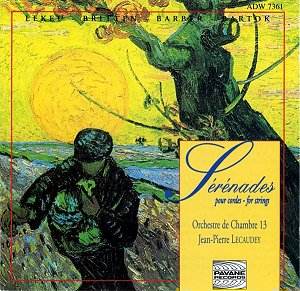
This Pavane disc—reissued, one assumes, from an earlier album though the company coyly refuses to say—offers Guillaume Lekeu’s Adagio for Strings alongside the usual suspects: Barber, Britten, Bartók. The programming makes sense. The execution doesn’t.
Let me start with what matters. Lekeu’s Adagio deserves wider currency than it enjoys. The Belgian composer, dead at twenty-four from typhoid (having eaten contaminated sorbet, if memory serves), left behind work of genuine emotional penetration—not merely promise, but achievement. This piece breathes. It knows something about longing, about the way a melodic line can trace the contours of grief without wallowing. The harmonic language owes debts to Franck and d’Indy, yes, but there’s an individual voice here, one that leans into chromaticism without losing tonal moorings.
The Orchestre de Chambre 13 under Jean-Pierre Lecaudey gives us a reading that’s… serviceable. Twelve strings simply aren’t enough for this music—the sonority feels threadbare where it should bloom, especially in the climactic passages where Lekeu piles on the intensity. Armin Jordan’s Erato recording, with proper forces, reveals dimensions that remain stubbornly two-dimensional here. The intonation is secure, the phrasing intelligent enough, but where’s the expressive heft? Where’s the sense that these players have lived with this music long enough to find its secrets?
Britten’s Simple Symphony fares worse. This ought to be irresistible—the composer’s youthful tunes refracted through mature craft, wit dancing with nostalgia. Instead we get something dutiful, literal-minded, as if the players were sight-reading competently rather than inhabiting the music. The “Playful Pizzicato” plods. The “Sentimental Sarabande” manages neither sentiment nor architectural clarity. Britten’s own Decca recording, even after all these years, puts this to shame—and not because of superior craft, but because of superior understanding.
The Bartók Romanian Folk Dances should crackle and spit. They don’t. The solo violin attempts at gypsy inflection sound self-conscious, even mawkish—an outsider’s approximation rather than the real article. Where Bartók demands earthy vigor and rhythmic snap, we get neatness. Tidiness. The sort of playing that wouldn’t disturb anyone’s Sunday afternoon tea.
Barber’s Adagio suffers from the same problem that afflicts the Lekeu: insufficient forces. With twelve strings, we’re essentially hearing the original String Quartet version in disguise—which has its own austere beauty, admittedly, but strips away the orchestral richness that makes the standard version so overwhelming. The interpretation itself is sensitive without being particularly moving, shaped without being shaped by anything urgent.
The recording doesn’t help. Close, dry, with audible edits that jar the ear. And forty-three minutes? In 1996, when this was apparently produced, that might have passed muster. As a reissue in 2002, it looks stingy.
Still—that Lekeu. If you don’t know the piece and can find this disc cheap, it’s worth hearing, inadequate performance notwithstanding. The music itself argues for its place in the repertoire. One wishes it had found better advocates.
Two stars for the performances, three for the Lekeu discovery.