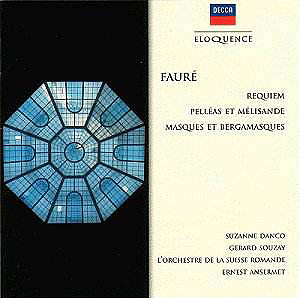
Gabriel Fauré (1845–1924)
Requiem Op. 48; Pelléas et Mélisande – Incidental Music, Op. 80; Masques et Bergamasques, Op.
112 Suzanne Danco (soprano), Gérard Souzay (baritone) L’Union Chorale de la Tour de Peilz; L’Orchestre de la Suisse Romande Ernest Ansermet, conductor Recorded circa 1960 (ADD) Label: DECCA Eloquence 450 131-2 [67:05] — Super-budget reissue, available via www.buywell.com — Ansermet’s Requiem is one of those recordings that simultaneously fascinate and frustrate in equal measure—like a half-remembered dream that’s exquisite in pieces but stubbornly elusive in totality. This 1960 Decca release, now reissued on Eloquence, invites repeated listening, but I confess it left me far from convinced. The opening Introit et Kyrie sets the tone immediately—deliberately slow, almost ponderous, yet not quite contemplative; more like a heavy-footed procession through a fog.
The violas, notably sour in their tuning, prick the ear unpleasantly, and the choir’s entrance doesn’t so much uplift as unsettle. Balance within the choir is uneven: tenors poke out like unwelcome guests, the sopranos’ vibrato is heavy-handed to the point of opera-house flamboyance—which, in this intimate score, feels misplaced…. The choir’s phrasing, especially in the Sanctus, is ragged; legato lines stumble, as if the singers are wrestling with both tempo and intonation.
That opening phrase—Sanctus, Sanctus, Sanctus—should soar, but here it’s more of a stammer. Ansermet’s tempi throughout oscillate between the painfully slow and the slightly rushed. The opening Requiem aeternam is stretched so far it threatens to unravel, while the Amen in the Offertorium speeds forward as if suddenly impatient with the solemnity.
This jitteriness suggests either a lack of stylistic conviction or perhaps the leader’s struggle to assert a cohesive vision. His signature clarity and rhythmic precision—hallmarks in his Stravinsky recordings—are here compromised by a certain indulgence. The soloists offer mixed fortunes.
Suzanne Danco’s soprano, once admired for its crystalline purity, now reveals the wear of years: — a subtle beat in her tone undercuts the ethereal quality one hopes for in Pie Jesu. She sings with sensitivity but her delivery leans toward the stage rather than the sanctuary. Gérard Souzay, by contrast, remains the jewel of the rendition.
His baritone lines in the Libera me and In paradisum are imbued with rich, nuanced melancholy that cuts through the recording’s otherwise murky waters. If you’re after a definitive Fauré Requiem, this is not it. There are superior, more idiomatic alternatives aplenty: Andrew Davis’s robust yet tasteful Sony account; John Rutter’s balanced, intimate Collegium version; or Jeremy Summerly’s lucid Oxford Camerata rendition on Naxos all provide far clearer interpretative insight.
The subtle intake of breath before the pianist’s attack.
Ansermet’s reading feels like an echo from a bygone era—grandiose at odds with Fauré’s subtlety. However, the disc’s real strength lies in the coupling. Here, Ansermet and the Suisse Romande shine with unmistakable polish and sparkle.
The Masques et Bergamasques and Pelléas et Mélisande suites are performed with elegance and a natural, unforced grace. The famous Sicilienne, featuring a beautifully unadorned flute tone, breathes with a lightness that belies the band’s reputation for occasional unevenness. Phrasing is finely sculpted, tempi well judged, and the acoustic warmth of the recording captures the orchestral textures with inviting clarity.
In sum: purchase this disc for the incidental music and — well — suites—delightful treasures that still retain freshness decades on. The Requiem, however, is a curio best reserved for Ansermet’s devotees or those with a taste for the “old school” grand manner, where intimacy is sacrificed for a somewhat operatic sweep. A production of uneven fortunes, then; admirable but not essential.