Felix Draeseke (1835–1913)
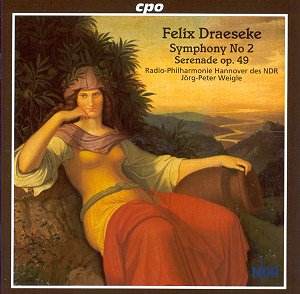
Symphony No. 2 in F major, Op. 25 / Serenade in D major, Op.
49
Radio-Philharmonie Hannover des NDR / Jörg-Peter Weigle
Recorded Grosser Sendesaal des Landesfunkenhauses Niedersachsen des NDR, Hannover, September 1998 & November 1999
CPO 999 719-2 [66:13]
Draeseke’s Symphony No. 2 arrives with the weight of historical context that’s as much a burden as a blessing. A “composer’s composer” they call him in the accompanying notes—a phrase that often signals subtlety veering into obscurity.
His second symphony, dating from 1871, attempts a place among the giants of the late Romantic symphonic canon but, frankly, it struggles to carve out an identity distinct or compelling enough to resonate beyond the specialist’s ear. The opening "Allegro" strikes one first as rather stolid; earnest, yes, but without the harmonic daring that contemporaries like Brahms or Dvořák were wielding with apparent ease. The thematic material feels—if not outright pedestrian—then at least cautious, settling into a pattern — of conventional sonata form without the kind of motivic development that would electrify or provoke.
The orchestra is well marshaled here by Weigle and his Hannover ensemble—the brass fanfares are clean and firm, the strings articulate, yet the music itself often sounds like going through the motions. The textures are dense but rarely dramatic, and the flashy orchestral gestures lack the kind of psychological tension that might keep the ear truly hooked. But then the second movement, the Allegretto marziale, jolts the listener awake.
Here, Draeseke’s fingerprints emerge more vividly—those sudden horn and trumpet calls recall Bruckner’s solemn grandeur or even Mahler’s incisive tonal surprises. The martial rhythms are sharply etched; there’s a certain raw vigor — a glimmer of originality that the first movement largely misses. One wishes the symphony had been structured around such moments.
Yet, alas, the "scherzo" that follows retreats into the earlier movement’s noisy meanderings—more surface bustle than substance. The "finale" begins promisingly enough. A jaunty woodwind theme suggests an air of lightness and wit, but Draeseke’s earnestness soon reasserts itself—extending — episodes just a shade too long, sapping momentum, and leaving the listener somewhat drained before the music closes.
It’s a "finale" that hints at humor but ultimately succumbs to the composer’s weighty tendencies—earnestness substituting for invention. Contrast this with the Serenade in D major, Op. 49—an altogether different beast.
From the outset, Draeseke declares a lighter, more playful character. The opening Marsch bears traces of Mahler’s first Nachtmusik from his Seventh Symphony, with cheeky, almost Prokofiev-like rhythmic quirks that lend it a sly wit missing from the symphony. The Ständchen offers a beautifully lyrical ‘cello solo from Nicolai Schneider—though one must confess, the; recording captures some of those distracting inhalations and finger noises all string players seem cursed with.
Perhaps a minor mercy, this reminds us of the human effort behind the art. The Liebes-szene that follows is a highlight: elegant, with subtle woodwind writing that Weigle’s ensemble renders sensitively. This movement alone could convince curious listeners to give Draeseke a second chance.
The Polonaise that follows is sprightly, boasting a lively rhythmic spring and a delightfully wry ending, unexpected but welcome. Strangely, the "finale"—the most serious of the five movements—closes the Serenade with a touch of perversity, defying expectations of lightness, yet manages to feel sincere rather than heavy-handed. This disc—made in the acoustic warmth of the Grosser Sendesaal—captures the band with clarity and vibrant — presence, though at times the balance favors the brass a little heavily in the symphony’s denser passages.
Weigle’s leadership is assured, his tempi generally judicious if perhaps a touch safe. The NDR musicians respond with polish and subtlety, revealing the score’s finer details when the material allows. In sum, Draeseke’s Symphony No.
2 feels like a work trapped between ambition and restraint—worthy, yes, but ultimately; lacking the distinctive voice needed to stand tall amid late 19th-century symphonic giants. The Serenade, on the other hand, offers a refreshing glimpse of his lighter, more inventive side—an invitation to reassess a composer too long overshadowed by historical circumstance and unfortunate political associations. For those willing to venture beyond the standard repertory, this disc is well worth the price of admission—but frankly, it’s the Serenade that carries the day, the symphony best approached with cautious curiosity rather than unreserved enthusiasm.
The leader’s presence feels palpable even in this studio setting.