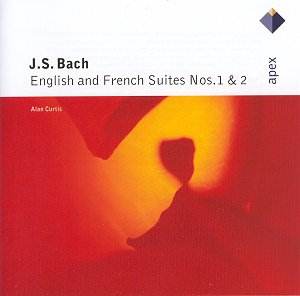
Harpsichord Bach: Curtis Makes His Case
These reissues from 1979 deserve attention—not because they’re revelatory or because Alan Curtis reinvents Bach’s keyboard suites, but because they’re so consummately professional, so musically satisfying, that they remind us what intelligent harpsichord playing can accomplish when ego takes a back seat to craft.
Curtis plays a 1728 Christian Zell instrument, splendidly restored, and the Hamburg engineers at Teldec captured it with exactly the right perspective. Not too close—you don’t hear every pluck and thwack of the mechanism. Not too distant either. Just right, so the instrument’s timbral personality emerges without the music losing its architectural clarity. Getting harpsichord sound on tape is notoriously tricky; many recordings founder on exactly this problem. The Zell has a singing quality in the treble, a firm foundation below, and Curtis knows how to make it speak.
His tempos feel inevitable. That’s harder than it sounds with Bach, where a slight miscalculation in the “Allemande” of the English Suite No. 2 can make everything feel either sluggish or rushed. Curtis finds the pulse—the inner dance rhythm—and lets Bach’s lines unfold with natural breathing space. His ornamentation is tasteful without being timid, elaborate enough to suggest French practice (Bach studied Couperin closely) but never fussy or distracting.
The English Suites are more substantial affairs than their French cousins, opening with preludes that range from the contrapuntal density of No. 1 to the Italianate brilliance of No. 6. Why “English”? Nobody really knows, though the theory about “a distinguished Englishman” keeps getting recycled in program notes. Curtis treats them as serious keyboard compositions—which they are—without inflating them into something grandiose. His articulation in the “Courante” movements is particularly fine, crisp without being clipped, the rhythmic spring always present.
The French Suites get equally committed advocacy. These are more intimate pieces, less showy, and Curtis’s relatively straightforward approach serves them well. He understands that Bach’s dance movements aren’t mere genre exercises but contain real musical argument. Listen to how he shapes the “Sarabande” from the French Suite No. 5—the long notes allowed to resonate, the inner voices carefully weighted. Or the “Gigue” from No. 6, which dances without becoming frantic.
What Curtis doesn’t do is impose a strong interpretive personality on this music. Some listeners will find that a virtue, others a limitation. He’s not going to startle you with unexpected rubato or aggressive dynamic contrasts (limited as they are on the harpsichord anyway). His Bach is classical, balanced, clear-headed. If you want something more willful or idiosyncratic, look elsewhere—Gustav Leonhardt, perhaps, or the young Pierre Hantaï.
But there’s real value in Curtis’s approach, especially at budget price. He lets Bach’s extraordinary craftsmanship speak for itself, trusts the music to make its effect without intervention. The twelve suites probably date from Bach’s Cöthen years (1717–1723), when he was writing primarily instrumental music for a Calvinist court that didn’t require elaborate church compositions. They represent Bach thinking through French dance forms with German thoroughness and contrapuntal sophistication—a synthesis that still sounds miraculous.
The recorded sound has held up remarkably well. Some tape hiss, perhaps, but nothing distracting. The acoustic of the Kunst und Gewerbe in Hamburg provides just enough resonance without blur. You can hear the instrument clearly, follow individual voices in the polyphonic textures, sense the physical presence of the player.
These aren’t reference recordings that will redefine your understanding of Bach’s keyboard suites. They’re something arguably more useful: intelligent, musical, technically accomplished performances that you can live with happily. Curtis plays with conviction but without self-importance, and that’s a rare combination. At super-budget pricing, spread across three discs, this is Bach harpsichord playing you can recommend without reservation to anyone building a basic collection—or to seasoned listeners who simply want well-played Bach without interpretive fireworks. Sometimes that’s exactly what’s needed.