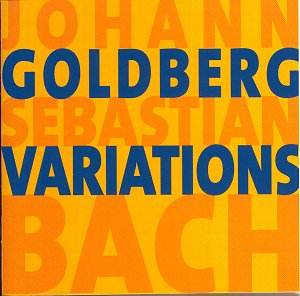
Johann Sebastian Bach
Goldberg Variations, BWV 988
Ekaterina Dershavina, piano
Recorded November 1994, Musikstudio 1, Saarländischer Rundfunk
Arte Nova 74321 34011 2 [77:13]
Released on Brilliant Classics (budget price point)
Ekaterina Dershavina’s interpretation of Bach’s Goldberg Variations is—at once—both a discovery and a reminder. Here is a young pianist, evidently possessing considerable technical gifts, who nonetheless opts for a clear-eyed, rhythmically driven reading rather than the more showy or eccentric approaches one often encounters. The performance feels, in the best sense, unpretentious—something rare among young virtuosi eager to dazzle.
The tempi Dershavina chooses are brisk without lapsing into the mannered urgency of, say, Glenn Gould’s visionary but idiosyncratic renditions. She pushes forward with a certain nervous energy especially in the faster variations, but never so fast as to blur the contrapuntal lines…. Take variation 15, for instance—a notorious whirlwind of scale runs up and — well — down the keyboard.
Here her fingers fly with breathtaking clarity and precision, yet the articulation remains pointed, the harmonic structure transparent. It’s one of those moments where you feel the music’s architectural brilliance laid bare with joyous immediacy. Yet it’s not only about speed.
Dershavina’s touch on the slower variations reveals a thoughtful — even tender, sensibility. Variation 25—the monumental "Adagio"—is played with a nuanced, almost caressing lyricism. She phrases with a natural ebb and flow that, while occasionally flirting with rubato, never distorts the formal balance.
The warm acoustics of the concert hall seem to breathe through the album.
Particularly noteworthy are the subtle embellishments she adds in the repeats; these are never gratuitous flourishes but rather organic extensions of the musical line, enhancing the emotional depth without drawing undue attention. There are a few moments where the rhythmic propulsion stutters—variation 26 comes to mind—where the clarity of the rhythmic pulse falters under technical pressure. These imperfections, however, feel like brief slips rather than fundamental flaws.
They lend the recording a certain humanity — a reminder that this is a live interpretation rather than a mechanical exercise in perfection. Dershavina’s dynamic palette throughout the Goldberg is admirably varied. She shapes phrases with carefully measured crescendos and decrescendos, avoiding the extremes of both monotony and melodrama.
The rapid variation 5, with its shimmering figuration, benefits from a lightness of touch that keeps the music flowing rather than pounding. In contrast, the more grandiose moments are imbued with a weight that grounds the music without heaviness. Ornamentation—so crucial in Bach—is handled with commendable finesse.
Dershavina’s embellishments in variation 9 are florid yet controlled, never tipping into excess. They sound like natural outgrowths of the melodic line, reflecting a solid understanding of Baroque performance practice without descending into pedantry. The recording quality itself is serviceable rather than sumptuous.
The piano tone occasionally sounds a bit dry, lacking the warm resonance one might hope for in such a rendering. Yet this austerity somehow suits the work’s crystalline counterpoint—there’s no excess reverb or studio gloss to distract from the music’s intricate textures. In sum, this Goldberg is a compelling proposition—especially at its budget price.
Dershavina may not (yet) have the name recognition of some of her peers, but her artistry here makes a strong case for attention. She combines youthful energy with a mature sense of style, balancing virtuosic flair with interpretive restraint. For those seeking a fresh alternative to the more canonical recordings, this is a — worthwhile addition, a interpretation that—despite its occasional imperfections—resonates with genuine musical intelligence and heart.
A fine achievement, deserving of wider recognition.