Bach: Six Suites for Solo Cello, BWV 1007–1012
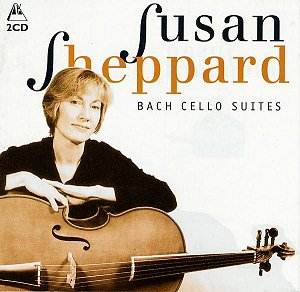
Susan Sheppard, cello
Metronome MET 1034/35. Recorded 1998, Claydon House. 2 discs, 132:40
The trouble with Bach’s cello suites—and it’s a magnificent trouble—is that they reveal everything. Technical inadequacy, rhythmic uncertainty, interpretive vacillation: the solo line offers no place to hide. Susan Sheppard’s traversal on period instruments understands this implicitly, yet her recording founders on the very rocks it seems most eager to navigate.
Sheppard employs two baroque cellos here: a four-string instrument for the first five suites, a five-string cello for the Sixth Suite (as Bach likely intended, though we’ll never know for certain). The four-string instrument possesses a genuinely radiant sound—warm, slightly reedy, with that characteristic gut-string bloom. Unfortunately, the recorded acoustic at Claydon House drowns this intimacy in reverb. One longs to hear the bow-hair catching on the strings, those minute articulative details that give period performance its particular thrill.
The interpretive stance proves more problematic still. In the First Suite’s Prelude, Sheppard introduces an odd hesitancy on the opening downbeats—a kind of agogic accent that disrupts rather than clarifies the phrase structure. It’s disconcerting, particularly as the gateway to the entire cycle. The G major Courante, by contrast, bristles with energy; here she drives the dance forward with real conviction, the triple meter propulsive rather than merely ornamental.
But then we encounter the E-flat major Suite’s Allemande—and the interpretive coherence collapses entirely. This movement, deceptively simple in its stepwise motion, requires an almost vocal line, a sense of cantabile that transcends the cello’s percussive attack. Sheppard sounds earthbound, heavy, as though she’s counting beats rather than shaping phrases. The rhythm plods. One remembers Casals here, or Bylsma, or even Starker’s unadorned but rhythmically alive approach—and realizes what’s missing.
Yet the Minuets in that same First Suite dance with genuine charm. Sheppard finds the proper lilt, the slight inequality in the beat that distinguishes French dance style from Germanic four-square-ness. The Sarabandes, too, often achieve a real poignancy—those sustained notes allowed to speak, to decay naturally, the ornaments tasteful rather than fussy.
The inconsistency maddens. When Sheppard engages fully with this music—and she does, in perhaps two-thirds of these movements—she offers playing of considerable insight. The sinuous passagework in the Third Suite’s Prelude flows with liquid grace. The fierce double stops in the Fifth Suite’s opening movement (she tunes down the A string, as indicated) sound genuinely anguished, those parallel fifths grinding against each other with proper asperity.
But then another movement arrives where the rhythmic profile simply doesn’t cohere, where the dance refuses to dance, where one senses the player hasn’t quite internalized the music’s structural logic. It’s as though these suites were recorded piecemeal—which, given the session dates spread across 1998, they apparently were—without sufficient attention to the cycle’s overall architecture.
The Fifth Suite, in C Minor, suffers particularly. This darkest of the suites, with its elaborate Prelude and that extraordinary Sarabande (surely one of Bach’s most profound utterances), needs a guiding intelligence that can sustain long-range harmonic thinking. Sheppard gives us local beauties but loses the forest for the trees.
One wishes this set were better. The timbral palette is attractive, the musical intelligence evident, the best movements genuinely distinguished. But Bach’s suites demand more than intermittent inspiration—they require the kind of thorough, deeply absorbed understanding that allows every movement, every phrase, every note to find its proper place in the larger design. This recording, alas, suggests work in progress rather than achieved vision. There are finer period-instrument alternatives—Jaap ter Linden, Anner Bylsma’s second recording, Christophe Coin—and in modern guise, the choices multiply exponentially. Sheppard’s effort remains a tantalizing might-have-been.