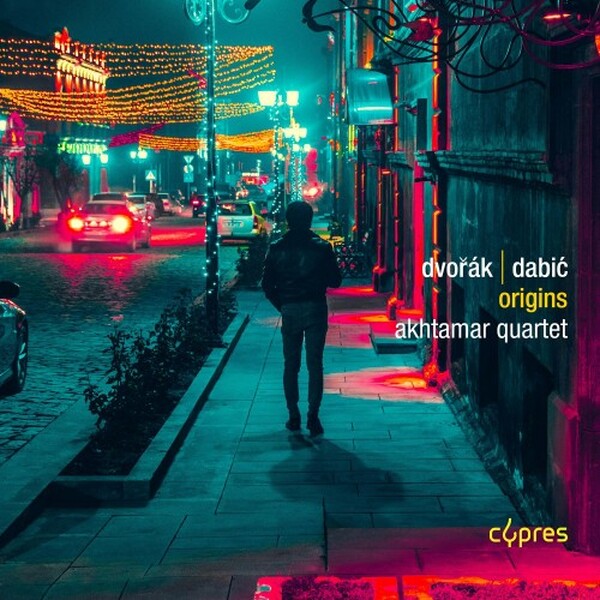
Title: Dvořák/Dabić: Origins
Composer(s): Antonín Dvořák; Jelena Dabić
Work(s): String Quartet No. 13 in G major, Op. 106; Anzhamanak
Performer(s): Akhtamar Quartet
Label: Cypres
Format: CD / Digital
Dvořák’s Op. 106 is one of those late quartets that can make “maturity” sound like a compliment instead of a hospice term, and Akhtamar have the good sense not to inflate it into a nationalist monument or shrink it into tasteful upholstery. They play it as living chamber music—supple, lucid, intimate, with a lean glow that keeps the lines moving and the emotions from turning sticky. The first movement breathes; the Adagio sings without begging; the Furiant has lift instead of stomp; and in the finale they understand that fire doesn’t require blunt force. They’re not out to dazzle you with aggression or martyr themselves on the altar of profundity. Better: they persuade.
The hook, though, is Jelena Dabić’s Anzhamanak, a new work about home, memory, and the old modernist problem of how to sound rooted without becoming folkloric wallpaper. It helps that Akhtamar play it as if it belongs here. The drones, glissandos, microtonal turns, and knocked-about asymmetries don’t feel like grant-application effects; they feel inhabited. There’s ritual in it, and unease, and a tactile sense of remembered sound—something half-heard from another room, another country, another century. Which makes the pairing smarter than “classic plus contemporary” usually is. Instead of contrast for its own sake, you get an argument: homeland regained, homeland imagined, homeland fractured into texture and pulse.
So yes, Origins is a concept album, but in the good sense—coherent, playable, and emotionally legible. The sonics help: close, clear, resonant enough to flatter without turning everything to cream. Maybe the Dvořák could use a touch more danger if you like your quartets to leave claw marks. But Akhtamar’s real achievement is rarer than danger anyway: they make intelligence feel warm.