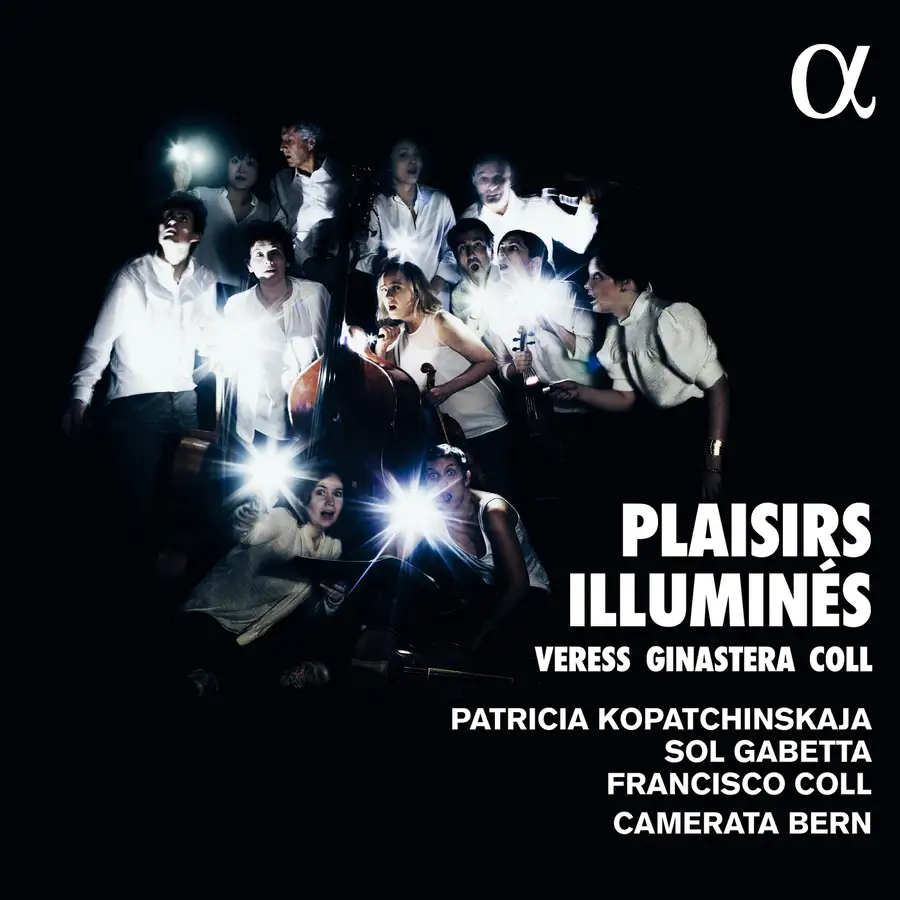
Composer(s): Sándor Veress; Alberto Ginastera; György Kurtág; György Ligeti; Francisco Coll
Works: Musica concertante; Concerto for Strings; selected miniatures by Kurtág and Ligeti; Les Plaisirs illuminés
Performers: Patricia Kopatchinskaja, violin; Sol Gabetta, cello; Camerata Bern
Label: Alpha Classics
Catalog Number: ALPHA 664
Format: CD / Digital
Release Year: 2021
Patricia Kopatchinskaja has made a career out of turning “interesting program” into “drop what you’re doing,” and Plaisirs illuminés is one of those records where the concept actually earns the hype. The album brings together music by Sándor Veress, Ginastera, Kurtág, Ligeti, and Francisco Coll, with Camerata Bern at the center and Sol Gabetta joining for Coll’s title work.
What makes it work isn’t just that the repertoire is smart. Plenty of records are smart. This one is feral, sleek, and wired. Veress’s Musica concertante and Ginastera’s Concerto for Strings give you the big frame—string writing as ritual, attack, and communal argument—while the tiny Bartók-adjacent miniatures by Kurtág and Ligeti act like splinters under the skin. Then Coll’s Les Plaisirs illuminés, written for Kopatchinskaja and Gabetta, shows up not as dutiful “new music” dessert but as the thing the whole album has been circling: lyricism under pressure, virtuosity with a pulse, modernism that knows how to seduce.
Kopatchinskaja, naturally, is the animating disorder in the room. She doesn’t prettify this stuff, doesn’t deodorize it, doesn’t pretend that string tone exists mainly to reassure the bourgeoisie that civilization is still intact. What she and Camerata Bern give you instead is precision with teeth. This isn’t diva plus backup but an ensemble of equals playing like the floorboards are hot.
The Ginastera in particular is a killer because it lets the group be both disciplined and slightly dangerous. They don’t smooth over the score’s percussive drive or try to turn its nerves into plush atmosphere. And when Coll arrives with Gabetta, the album doesn’t suddenly go soft; it just gets more intimate, more insinuating. Equal partnership matters there: Gabetta and Kopatchinskaja sound like two brilliant people pushing each other into sharper focus.
Best of all, this thing avoids the standard contemporary-classical trap of making you admire it more than you want to replay it. Plaisirs illuminés is replayable. Not because it’s easy—there’s too much bite in it for that—but because it’s sequenced like a real album and performed like everybody involved knows that danger, wit, and beauty aren’t separate departments. It’s a modern classical record with blood in it.