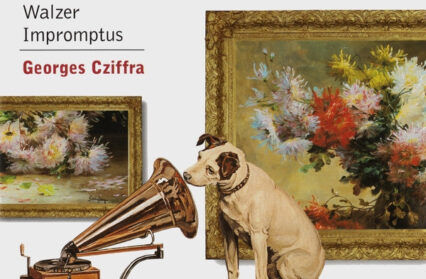
Title: Frédéric Chopin: Waltzes; Impromptus
Composer: Frédéric Chopin (1810–1849)
Works: Waltzes, complete, nos. 1–19; Impromptus, complete, nos. 1–4
Performer: Georges Cziffra, piano
Label: EMI Classics
Catalog Number: 5 74975 2
Format: CD
Recorded: 1974, 1977, 1978
Recording Location: Salle Wagram, Paris
Total Time: 79:08
Georges Cziffra’s Chopin has never been for listeners who want their poetry carefully pressed and framed under glass. He was one of the grand eccentrics of the keyboard, a pianist of astonishing velocity, old-world glamour, and instinctive theatricality, and this disc of the complete waltzes and impromptus shows both the virtues and the liabilities of that temperament. It is not a modest, inward, text-first Chopin. It is a Chopin of impulse, risk, color, and nerves.
That matters immediately in the waltzes, which too often are treated either as salon trifles or as overperfumed miniatures. Cziffra refuses both approaches. He gives them profile. He hears their swagger, their flicker of melancholy, their abrupt turns of mood. Rhythm is the key to his success here. The lilt is never merely decorative; it has spring, lift, and occasionally a dangerous edge. Even in the most familiar pages, he keeps the music from settling into received mannerism. One feels a live mind shaping every phrase.
What is striking, too, is how often Cziffra reminds us that these pieces are not simply charming. Beneath the dance pulse lies something unstable: hesitation, nostalgia, private regret. He can color a repeated phrase so that it seems to remember itself differently the second time. Inner voices appear and vanish with almost improvisatory freedom. At his best, he makes these compact forms feel less like finished miniatures than like fleeting revelations.
The impromptus suit him even better. Here his freedom sounds less like intervention than like native speech. Chopin’s improvisatory surfaces, with their surges and suspensions, give Cziffra room to do what he did uniquely well: make virtuosity sound like thought in motion. Passagework flashes brilliantly, but the point is not brilliance alone. He understands that these pieces must sing through their decoration, and when he relaxes into the melodic line, the playing acquires a generosity and glow that are deeply persuasive.
The Fantaisie-Impromptu, inevitably, becomes a test case. Cziffra does not underplay its showpiece character, nor does he apologize for its popularity. The outer sections have electricity, but the central cantabile is what tells. He lets it unfold broadly, with real affection, and for once the contrast feels earned rather than merely strategic. In the B-flat-major Impromptu and the F-sharp-major Impromptu, he is especially compelling, finding a tensile elegance that keeps the music airborne.
Still, this is not uniformly ideal Chopin. Cziffra can be impatient with repose. Some phrases are pressed forward where a more yielding hand might allow the music to breathe. At times he substitutes excitement for mystery, and in Chopin that is always a bargain with losses. The smaller waltzes occasionally feel slightly overcharacterized, as though a raised eyebrow had become a gesture too many. Listeners devoted to the patrician inwardness of Rubinstein or the aristocratic control of Lipatti may find Cziffra too willing to court effect.
But effect, in Cziffra’s case, is rarely empty. It grows from temperament, from a musician who played as though the keyboard were a place of personal liberation. That gives this recording its enduring interest. It is not a neutral survey of the complete waltzes and impromptus; it is a performance personality meeting Chopin halfway, and sometimes more than halfway. The result is uneven only in the way that vivid art is uneven: one hears excesses, but one also hears life.
The recorded sound, from the Salle Wagram sessions, is serviceable and flattering enough to preserve the brilliance of Cziffra’s attack without too much glare. More important, it catches the scale of his sonority. He could make the piano sound orchestral when he wished, then suddenly draw it down to something confidential and intimate. That range is central to the appeal here.
So this is not the last word in Chopin, nor the most scrupulously balanced. It is, however, one of the more distinctive. Cziffra plays these works not as porcelain objects but as living things—volatile, elegant, wounded, and occasionally extravagant. That will not suit every taste. It need not. The performances have enough imagination, nerve, and keyboard splendor to make their own case, and in the best moments they do so irresistibly.