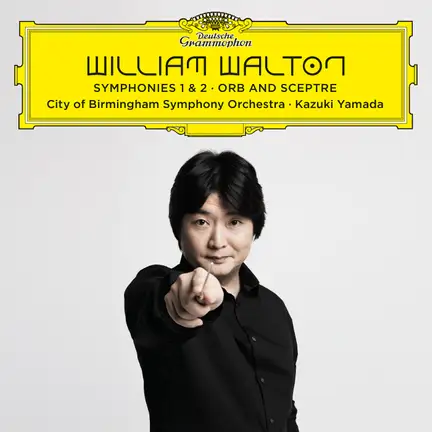
Walton: Symphony no. 1 in B♭ minor; Symphony no. 2; Orb and Sceptre
City of Birmingham Symphony Orchestra; Kazuki Yamada, conductor
Deutsche Grammophon 4868227 • Recorded 2024–25, Symphony Hall, Birmingham • 83:00
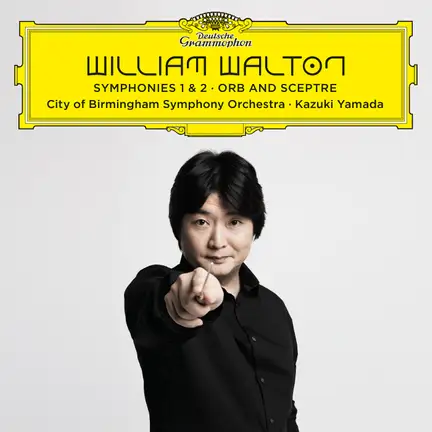
Kazuki Yamada and the City of Birmingham Symphony Orchestra recorded this symphony live in November 2025, and the live origins show in the best possible way. There is an urgency here, a sense of musicians committed to the argument rather than merely executing it. The opening "Allegro" assai bites hard from the first bar—the CBSO strings have real edge, and Yamada resists the temptation to pull back at the lyrical moments, letting the tension accumulate across the movement’s long paragraphs. At fifteen minutes it is one of the longer accounts on record, but it never feels indulgent. It feels inevitable.
The "Presto", con malizia—that instruction, “with malice,” tells you everything—is dispatched with appropriate savagery. The woodwind writing here is brutal, the rhythmic dislocations genuinely unsettling. Yamada has clearly studied the score’s polyrhythmic complexity without letting the study show; the malice sounds spontaneous. The "Andante" is the emotional center of the symphony, and here Yamada allows himself—and his players—genuine breadth. The CBSO strings sing with warmth without becoming sentimental. This is a movement about desolation and acceptance, not consolation, and Yamada understands the difference.
The "finale", Maestoso–Brioso ed ardentemente, is where lesser performances fall apart. The fugal writing is fiendishly difficult, and the temptation is to drive through it at all costs. Yamada builds it methodically, the brass writing emerging with real weight, the climax arriving with the sense of something earned rather than imposed. The final bars have genuine grandeur—not pomp, grandeur.
The Second Symphony, recorded a year earlier, presents a different challenge altogether. Written twenty-five years after the First and dedicated to Georg Szell, it is a cooler, more ironic work—the product of a composer who had fought one war, watched another reshape the world, and arrived at a kind of guarded equilibrium. Some find it disappointing after the First’s volcanic energy. Yamada makes a convincing case for it on its own terms. The opening "Allegro" molto has a Prokofiev-like brittleness, the harmonies never quite settling, the textures deliberately lean. The Lento assai unfolds with the unhurried concentration of someone who has learned patience the hard way. The final Passacaglia—theme, variations, fugato, coda—rewards Yamada’s structural clarity: you can hear the architecture throughout, which is the only way this movement works.
Orb and Sceptre, the coronation march written for Elizabeth II in 1953, opens the disc and sets the tone—confident, gleaming, the CBSO brass in magnificent form. It is not Walton’s deepest music, but it is Walton’s most immediately lovable, and Yamada plays it with the affectionate swagger it deserves.
This is the DG debut for both Yamada and the CBSO, and the label has served them well. The Symphony Hall acoustic is caught with presence and depth—live recordings can sound congested in this kind of hall, but the engineering here gives the orchestra room to breathe. The brass never overwhelm the strings; the woodwinds register clearly in textures where they can easily disappear.
The competition is formidable. Previn’s recording with the LSO (RCA, 1966) remains the classic account of the First Symphony—leaner, perhaps slightly more dangerous. Rattle’s Birmingham recording from 1990 (EMI) has sentimental claims, given the orchestra. But Yamada’s account is a serious contender: more expansive than Previn, more dramatically cogent than some later versions, and better recorded than almost anything. For the Second Symphony, the field is thinner, and Yamada’s reading may well be the finest currently available.
A distinguished debut, and a reminder that Walton’s symphonies deserve rather more attention than the British musical establishment has seen fit to give them.