Johannes BRAHMS (1833-1897)
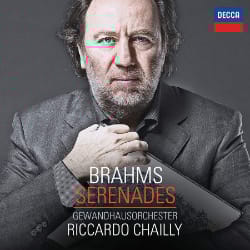
Serenade No 1 in D, Op 11 (1857-9) [39:09]
Serenade No 2 in A, Op 16 (1859) [26:09]
Gewandhaus Orchestra, Leipzig/Riccardo Chailly
rec. Gewandhaus, Leipzig, May 2014
DECCA 478 6775 [65:19]
The two Serenades have always been something of an embarrassment. Not to Brahms—he knew what he was doing, even at twenty-four—but to the commentators who can’t quite figure out how to fit these sprawling, generous, unashamedly entertaining works into their narrative of Brahms the Severe. They want the First Symphony, that monument to Germanic seriousness. What they get instead is music that actually smiles.
Chailly understands this. Better yet, the Gewandhaus Orchestra understands it, in their bones and in their collective memory—this is music that belongs to Leipzig as surely as it belongs to Hamburg or Vienna. The opening of the D major Serenade unfolds with a warmth that never tips into sentimentality, the string tone full and centered without that glossy sheen some modern orchestras cultivate. Listen to how the violas emerge in the third bar, that subtle shift in color that tells you these players know this repertoire from the inside out.
The first Serenade is the problem child—six movements, nearly forty minutes, scored for an orchestra that includes not one but two each of flutes, oboes, clarinets, bassoons, horns, trumpets, timpani, and strings. It’s the work of a young man showing off, yes, but showing off with purpose. Brahms was teaching himself to think orchestrally, working through textures and balances without the shadow of Beethoven’s symphonies hanging quite so heavily over him. The Scherzo (or rather, the two Scherzos—he couldn’t decide, so he gave us both) have a rustic vigor that Chailly brings off with just the right degree of earthiness. The first horn’s solo in the D minor Scherzo… well, that’s the kind of playing that reminds you why this orchestra has maintained its reputation for nearly three centuries.
By the time of the A major Serenade, Brahms had learned subtraction. No violins—that’s the famous detail everyone knows. What matters more is the intimacy this creates, the way the violas become the singing voice of the ensemble. It’s chamber music for small orchestra, or orchestral music for large chamber ensemble, depending on which end of the telescope you’re looking through. The slow movement, marked Adagio non troppo, breathes with a tenderness that can sound cloying in the wrong hands. Not here. Chailly paces it with patience—perhaps even a touch too much in the first variation, where the tempo sags momentarily—but the overall arch is beautifully judged.
The wind playing throughout both works deserves special mention. The Gewandhaus winds have a particular sound, darker and more reedy than their British or American counterparts, and it suits this music perfectly. In the “Menuetto” of the second Serenade, the interplay between oboe and clarinet has that conversational quality that suggests genuine music-making rather than mere execution. These are details that matter, that separate a good reading from one that lodges in memory.
Decca’s engineering captures the Gewandhaus acoustic with unusual fidelity—you can hear the hall’s slight dryness, the way it refuses to flatter but never turns clinical. Some will miss the warmth of older recordings, the slight bloom that analog tape provided. I don’t. This is honest sound for honest music-making.
Does Chailly find everything in these scores? Perhaps not quite. The finale of the first Serenade could use more swagger, more of that Brahmsian joy that comes from rhythmic vitality rather than mere energy. And there are moments—the Quasi Menuetto in the first Serenade, for instance—where one wishes for more dynamic contrast, more of those sudden piano subitos that make you sit up and listen.
But these are quibbles. What Chailly and his orchestra offer is something increasingly rare: a performance that treats these works not as juvenilia or curiosities but as the substantial, deeply felt compositions they are. The Serenades may not carry the metaphysical weight of the later symphonies, but they have their own integrity, their own logic. This album honors that. More than that—it makes you want to hear them again, which is perhaps the highest compliment one can pay.