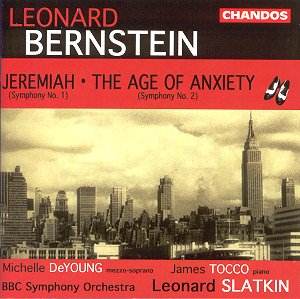
Bernstein: Symphony no. 1, Jeremiah; Symphony no. 2, The Age of Anxiety; Divertimento for Orchestra
Michelle DeYoung, mezzo-soprano; James Tocco, piano. BBC Symphony Orchestra; Leonard Slatkin, conductor.
Chandos CHAN 9889. Recorded at Watford Colosseum. Compact disc, 79:13.
There’s always been something—how to put this delicately?—something not quite symphonic about Bernstein’s symphonies. The orchestral panache is undeniable, that Broadway-meets-Copland vibrancy that makes you sit up straight. But architectural integrity? That’s where the trouble starts.
I’ve lived with these pieces for decades now, heard them under Bernstein himself (twice), under Marin Alsop, under any number of well-meaning conductors who couldn’t quite solve the structural puzzles Lenny left behind. Slatkin comes closer than most. He met Bernstein only a handful of times—no particular advantage there, perhaps even a blessing—and brings to this Chandos release a clarity of purpose that the composer’s own sometimes feverish interpretations lacked.
Jeremiah remains the more successful work. That opening “Prophecy” movement still sounds neo-Stravinskian in 2002, which tells you something about how little the musical landscape has shifted in certain precincts. Michelle DeYoung takes the final “Lamentation” with a darker mezzo sound than I’m used to—certainly darker than Nan Merriman’s pellucid simplicity in that 1945 Saint Louis recording. DeYoung’s expressivity borders on the operatic; whether that deepens or distorts the Hebraic text from Lamentations depends, I suppose, on what you think this movement is trying to do. I found myself missing Merriman’s directness, that quality of ritual mourning rather than personal anguish. But DeYoung is committed, technically secure, and Slatkin gives her room to breathe.
The Age of Anxiety is the real problem child. Always has been. Bernstein hung Auden’s massive poem around the neck of this symphony like an albatross—all those symbolic characters, the four-part structure, the metaphysical weight of postwar angst. Slatkin wisely refuses to explain it all in his notes, treating the work as absolute music. Smart man. The second part benefits enormously from his approach: “The Dirge” accumulates genuine gravitas, and “The Masque” has the right manic edge without toppling into hysteria.
James Tocco deserves special mention. This piano part is a beast—somewhere between concerto and obbligato, never quite committing to either role. Tocco navigates it with unflagging energy and real insight into the jazz inflections that Bernstein couldn’t help sprinkling everywhere. The cadenza passages crackle. When the piano drops into those bluesy meditations in “The Epilogue,” Tocco finds exactly the right weight—not too much sentiment, just enough urban loneliness.
The Divertimento makes a delightful encore. Eight miniatures written for the Boston Symphony Orchestra’s seventy-fifth anniversary—this is Lenny at his most unguarded, tossing off a “Waltz” here, a “Turkey Trot” there. Slatkin clearly had fun. That “Turkey Trot” is genuinely riotous, all squawking winds and percussion gone wild. The “Blues” section features some particularly low-down trumpet work; you can practically smell the cigarette smoke.
Chandos provides outstanding sound—the Watford Colosseum proving once again why it’s a favorite recording venue. The BBC Symphony plays with polish and, when needed, real bite. Slatkin’s experience with American repertoire shows in every bar; he knows how to let the brass blare without vulgarizing, how to shape those long Bernstein crescendos so they actually arrive somewhere.
Do these performances solve the fundamental problem of Bernstein’s symphonic ambitions? No. The structural weaknesses remain—those awkward transitions, the episodic nature of The Age of Anxiety, the sense that inspiration came in bursts rather than sustained architectural vision. But if you’re building a Bernstein collection, or if you simply want to hear these works played with maximum conviction and technical excellence, this disc makes a strong case. Not the final word—there probably isn’t one—but a thoroughly involving journey through Lenny’s restless, brilliant, maddening symphonic imagination.