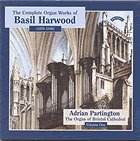
Basil Harwood: Complete Organ Works Vol. 1
Adrian Partington (organ)
Recorded circa 2000, Bristol Cathedral
Priory PRCD 683 [approx. £15-17]
Basil Harwood — an organist whose name, for many, still hovers shyly on the fringes of the English Romantic canon.
Here, in the first of what promises to be a extensive survey, Adrian Partington takes up the mantle with a glow of evident enthusiasm and insight. The organ of Bristol Cathedral—rich, with a robust diapason chorus and an articulate reed section—serves as the ideal vessel for these works, offering a palette both warm and incisive. The centerpiece, Sonata No.
1 in C Sharp Minor, Op. 5, is a fascinating study in late-Victorian chromaticism. It predates Elgar’s organ sonatas by nearly ten years yet shares their sweeping lyricism and — well — emotional breadth.
But where Elgar’s writing often feels muscular and extrovert, Harwood’s is more intimate—less a brash statement than a quietly profound meditation. The chromatic shifts are handled with subtlety, not for their own sake, but rather to underpin the hymn tune at the heart of the work. This hymn-based anchoring—so characteristic of Harwood—never slips into sentimentality.
Instead, it lends a spiritual gravitas that is both grounding and elusive. The Dithyramb, Op. 7 and two of the Six Pieces, Op.
15 (notably the "largo" and the "scherzo") were originally conceived as movements of a second sonata, abandoned in favor of separate publication. It’s a tantalizing “what if” in the composer’s oeuvre—one can imagine the structural weight these three pieces would assume when presented as a whole. As it happens, their individuality shines here in Partington’s hands, who brings out each mood with proper nuance.
From the brooding lyricism to the crisp, fleet-footed "scherzo", the articulation is clean without ever becoming brittle. The Capriccio, Op. 16 offers a spirited contrast.
It crackles with nervy arpeggios and relentless momentum, veering toward the secular, though Harwood’s hymn tune sneaks back in at the close—an affectionate nod, perhaps, to his ecclesiastical roots. Partington’s fingerwork here is nimble yet assured, never sacrificing clarity at the altar of speed. The pedal work, especially, deserves mention: it’s rounded, resonant, never muddy—a testament to both player and instrument.
If I had one quibble, it would be with the production balance. Occasionally, the swell division feels slightly recessed, which in the more refined passages undercuts the dialogic tension between manuals. But this is a minor slip in an otherwise exemplary capture that lets the organ’s colors bloom fully.
The booklet notes, with their detailed stop list and background on Harwood’s career — enrich the listening experience further. In sum, this disc is a revelation. Harwood’s organ music, often overshadowed by his contemporaries, emerges here as a distinctive voice—one that thoughtfully melds late-Romantic harmonic language with a deeply ingrained Anglican sensibility.
Partington’s advocacy is heartfelt and persuasive; his playing imbued with the kind of affectionate understanding that only comes from long companionship with the repertoire. This volume is not merely an archival curiosity but a vital addition to the English organ repertory. For those who prize the interplay between tradition and innovation, and the subtle art of hymn-inspired composition, it offers rich rewards.
The subtle intake of breath before the pianist’s attack.
I await the subsequent volumes with genuine anticipation. Highly recommended.