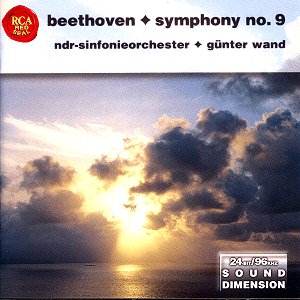
Ludwig van Beethoven (1770–1827)
Symphony No. 9 in D Minor, Op. 125 Choral
Edith Wiens (soprano), Hildegard Hartwig (mezzo soprano), Keith Lewis (tenor), Roland Hermann (bass)
NDR Symphony Orchestra / Günter Wand
Recorded 1987, Deutsche Harmonia Mundi / RCA Red Seal 74321 68005 2 [66:23]
Günter Wand’s 1987 Choral remains a compelling, if somewhat idiosyncratic, entry in the crowded discography of Beethoven’s Ninth.
Its virtues are many — vitality foremost among them — yet it is not without those nagging quirks that make you pause and reconsider what you expect from a “definitive” Ninth. The opening "Adagio"—"Allegro" agitato begins with a surprisingly brisk tempo. It’s no lumbering behemoth here; Wand opts for a crispness that almost borders on urgency.
The strings shimmer with a taut energy, the crescendos carving through the orchestral texture with a clarity that’s as invigorating as it is precise. One can almost smell the rosin and the varnish in the air. Yet, despite this nimbleness, the movement never feels rushed.
The phrasing is elastic, and the conductor’s keen attention to dynamic shading lends the music a kinetic tension that propels the narrative forward without sacrificing Beethoven’s architectural grandeur. Moving to the "Andante" con moto, Wand’s approach shifts. The tempo relaxes into a limpid fluency, the woodwinds floating with a pastoral gentleness that serves as a nuanced foil to the preceding agitation.
Here, the phrasing breathes naturally, unfettered by the need to impress with sheer power. The second subject’s "Andante" theme carries a plaintive grace, and one senses the leader’s respect for Beethoven’s lyrical invention — it is not sentimentalized, but rather, stated with a dignified pathos. As Sir George Grove once noted, this music can “draw tears from strong men with whiskers.” I confess, even clean-shaven, I found this passage quietly affecting.
The "Scherzo", fleet and — well — sprightly, is another highlight. Wand’s ensemble—NDR Symphony Company—is in its element, the rhythmic drive crisp but never mechanical. The interplay between the timpani and the lower strings is sharply etched, while the trio section introduces a rustic warmth that tempers the movement’s overall urgency.
The conductor’s presence feels palpable even in this studio setting.
There is an organic pulse here, as if the orchestra breathes with the music rather than merely playing it. Then, the "finale" — the grand Ode to Joy explosion that everyone knows but few manage to fully deliver with fresh conviction. Wand’s reading is admirable for its sincerity and structural coherence, though it lacks that; electrifying sweep of momentum that turns the "finale" into an ecstatic, almost transcendent experience.
The soloists — Wiens, Hartwig, Lewis, Hermann — are capable and musically attentive, though none quite seizes the spotlight with unforgettable individuality. The choral sound, too, disappoints somewhat; recorded at a distance, it occasionally feels pallid, lacking the immediacy and warmth that this pivotal moment demands. The spatial atmosphere of the recording places the chorus too far back in the acoustic mix, diminishing the visceral impact of Beethoven’s dramatic climax.
This is not to say the recording fails — far from it. The orchestral balances are exemplary, wind and brass particularly well captured, allowing each contrapuntal line to emerge cleanly. The engineering’s clarity is a notable strength, preserving the fine gradations of dynamics that Wand’s meticulous control requires.
Still, the absence of texts and translations in the booklet — despite its generous length — is a baffling omission. One wonders how many listeners will miss the words of Schiller’s immortal verse, which are so central to understanding the "finale"’s emotional arc. In sum, Wand’s Ninth is a disc of special merit: muscular, clear-eyed, and unafraid to impose its own interpretive stamp.
It might not convert those chasing the most flamboyant or “heroic” Ninth, but to those who; appreciate a reading that prizes architectural integrity, rhythmic vitality, and expressive nuance, it offers much to savor. For a super-budget purchase, it stands out as a sturdy, insightful companion on the Beethoven journey — one that rewards repeated listening, if you can tolerate the "finale"’s somewhat chilly choral voicing. A recording of genuine stature, then; not perfect, but profoundly musical in its own right.