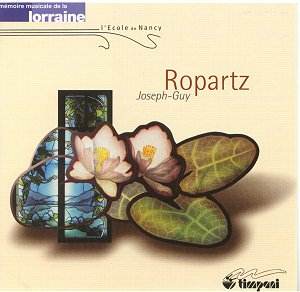
Ropartz: Chamber Music from the Granite Coast
Joseph-Guy Ropartz (1864–1955): Piano Trio; Prélude, Marine et Chansons; String Quartet No. 4
Jean-Louis Haguenauer, piano; Alexis Galpérine, violin; Cecilia Tsan, cello; Ensemble Stanislas
Timpani 1C1047 [70:05]
The Breton peninsula—all that wind-scoured granite and Celtic mist—produced more than dolmens and legends. It gave us Ropartz, a composer who studied with Franck in Paris but never quite shook the salt spray from his music. This Timpani disc offers three substantial chamber works spanning sixteen years, and if you think French music of this period means only Debussy’s shimmer or Ravel’s precision, well, you haven’t been listening hard enough.
I first encountered Prélude, Marine et Chansons decades ago through the Melos Ensemble’s EMI recording—one of those collections of French chamber music that used to circulate among those of us hungry for repertoire beyond the standard canon. Whether that disc survives in the catalog I couldn’t say. But this 1996 Timpani traversal renders the question academic.
The Piano Trio of 1918 carries the Great War in its bones. Ropartz was fifty-four when he composed it, old enough to have watched a generation disappear into the trenches. The first movement doesn’t wallow—that wasn’t his way—but it troubles itself with darker harmonies, that Franckian chromaticism twisted a degree tighter. The muscular progressions, the refusal of easy consolation… this is music that knows what happened at Verdun.
Then something unexpected: the second movement springs to life with pizzicato that actually dances. Not the brittle modernist wit of Les Six—this was written before that movement cohered—but something earthier, folksier perhaps. The note-cell that tops the texture keeps circling back, almost obsessive but never quite neurotic. Haguenauer, Galpérine, and Tsan catch this shift in temperature beautifully. Their articulation has bite without harshness.
The slow movement suspends time. Ropartz marks it Lent, and the performers take him at his word—perhaps too much so in a few passages where the line threatens to dissolve entirely. I was reminded, oddly, of John Foulds’ Cello Sonata from the same period. Both composers working at the edges of tonality without abandoning it, both reaching for something more austere than their Romantic training had prepared them to write. Tsan’s cello tone here turns inward, almost private, as if overhearing a meditation not meant for public utterance.
The finale’s Animé doesn’t erupt so much as it gradually warms, like sun breaking through coastal fog. There are moments—fleeting but unmistakable—where Ropartz touches the subdued pastoral ecstasy that Delius achieved in his Violin Concerto and Cello Sonata. Not imitation, mind you. Ropartz lacks Delius’s harmonic voluptuousness. But both composers understood how to let emotion accumulate through restraint rather than declaration.
A decade separates the Trio from Prélude, Marine et Chansons, and the aesthetic distance feels even greater. The romantic afflatus has burned off entirely. What remains is lean, melodic, surprisingly transparent for a composer often accused of Teutonic thickness. The scoring—flute, violin, viola, cello, and harp—might suggest Impressionist delicacy, but Ropartz writes with harder edges than Debussy ever permitted himself.
Ensemble Stanislas plays with admirable clarity, though I wish the recorded balance had given us more of the harp’s inner voices. The flute in the “Prélude” traces lines that feel medieval, as if some Breton minstrel song had been filtered through early twentieth-century harmonic sensibility. Then “Marine” opens up the texture—here’s that coastline again, but in high summer now, all radiance and warmth cut with something more astringent. The writing shares DNA with Bax’s chamber works, that same combination of Celtic atmosphere and aggressive rhythmic drive.
“Chansons” brings back the medieval flavor, but transmuted. Bird-calls flicker through the texture (actual bird-calls, not Messiaen’s later systematic ornithology). The harp finally emerges from the mix, and the whole ensemble achieves a transparency that makes the Trio seem positively Germanic by comparison.
The String Quartet No. 4 from 1934 represents yet another Ropartz—the composer at seventy, still writing but with even greater reserve. The two opening Allegros impress through what they withhold rather than what they declare. Ensemble Stanislas plays with exquisite tonal blend, though I occasionally wanted more individual voice characterization in the inner parts. The Quasi lento approaches the atmosphere of “Marine” from six years earlier, that same quality of suspended contemplation.
Then the final Allegro breaks loose—not wildly, not with the bouleversé tumble of melody you get in Foulds’ Quartetto Intimo from the same period, but with genuine energy, even joy. It’s remarkable how Ropartz, in his eighth decade, could still find this kind of rhythmic vitality. The quartet players dig into the syncopations with conviction, and the movement builds to a conclusion that feels genuinely earned rather than merely conventional.
The production values match the musical substance. Full-depth booklet, notes in three languages (Yves Ferraton writes with scholarly precision but readable prose), handsome card slipcase. Timpani clearly believed in this project, and their faith was justified.
We need the symphonies—particularly the fourth and fifth, which I know from broadcasts and which possess real granite-and-seaweed power. We need the other five quartets, the violin sonatas, the cello sonatas. But while we wait for those recordings (if they ever materialize), this disc stands as essential documentation of a composer who deserves better than footnote status in histories of French music.
The performances throughout are committed and technically secure, if occasionally a shade too polite in the Trio’s more anguished moments. But the repertoire itself—three substantial works, all in world premiere recordings—makes this disc indispensable for anyone interested in French music beyond the usual suspects. Sample any part of the triptych work or the Quartet’s finale if you’re skeptical. Then buy the disc