Songs and Piano Music
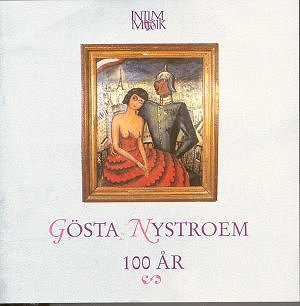
Gösta Nystroem (1890-1966)
Gunvor Nilsson (mezzo-soprano), Erik Risberg (piano)
INTIM MUSIK IMCD 007 (63.45)
Nystroem’s Northern Light: Songs from the Swedish Shore
Gösta Nystroem remains one of those composers—and there are more than we care to admit—who ought to command wider attention but doesn’t. This disc from Intim Musik, commemorating his centenary, makes a strong if imperfect case for his songs and piano miniatures. Recorded in Gothenburg’s concert hall in 1990, it captures mezzo-soprano Gunvor Nilsson and pianist Erik Risberg in repertoire they clearly know from the inside out.
The program is intelligently assembled: eight songs from Ur Ångest – Åtta dikter on texts by Pär Lagerkvist, three Shakespeare settings from Ur Musiken till Stormen, the five-song cycle Sånger vid havet, and several standalone pieces including “Det Enda“—that haunting song which serves as emotional anchor to Nystroem’s Sinfonia del Mare, a work I consider among the most unjustly neglected orchestral scores of the twentieth century.
Nilsson is a formidable artist, no question. Her “Det Enda” has genuine operatic heft, the voice darkening into those lower registers with real authority. But—and here’s where things get complicated—there’s a vibrato that kept pulling me out of the music’s spell. Not always, mind you. In the Lagerkvist settings, that darkness of tone, the almost bruised quality of her mezzo, seemed exactly right for the Nordic melancholy Nystroem was after. These are songs steeped in ångest, that particularly Scandinavian species of existential dread, and Nilsson doesn’t flinch from the emotional abyss.
Yet when I hear her in “Det Enda,” I think of Elisabeth Söderström’s late disc of Sibelius’s Luonnotar with Ashkenazy—a interpretation where vocal wobble intruded on music that demands granite stability. The comparison isn’t entirely fair; Nilsson has more technical security than Söderström did at that stage. But the issue remains. The vibrato becomes a wall between listener and song, particularly in the Shakespeare settings where Ariel’s lightness wants less vibrato, more transparency.
Still, there’s no denying her intelligence. Listen to “Jag hår ett hem vid havet” from the Sånger vid havet—she catches that peculiar quality of Nordic protest, the voice rising with something close to outrage before dissolving into the floating, seawrack-like textures that Nystroem would expand so memorably in the 1946 symphony. She understands these songs as dramatic utterances, not just lyric reflections.
The Shakespeare songs present a different Nystroem—more playful, though the 1940s dating suggests they emerged from dark times. Two of the three are Ariel songs, and they do have that flighty, sprite-like character, though Nystroem’s harmonic language remains more ambiguous than Quilter’s or even Finzi’s Shakespeare settings. “Ute i skären” from Sånger vid havet reminded me immediately of Britten’s “This ae Night” from the Serenade—that same chilled, nocturnal atmosphere, the sense of isolation made audible.
And then there’s “Vårnatt,” which strikes an entirely different note. This is Nystroem in popular mode—one thinks of “Vilia” from The Merry Widow, or even “Lili Marlene.” Honeyed nostalgia, Vienna between the wars, the world of Kiepura and Jeritza. I could imagine Cleo Laine or Marni Nixon slipping it into a Weill cabaret program, and it would fit perfectly. It’s utterly irresistible, and also utterly unlike everything else here. Nystroem contained multitudes.
Erik Risberg deserves more than passing mention. His two solo pieces—Prelude Pastoral and Valse Marine—reveal another facet of Nystroem’s imagination. The Prelude is no gentle pastoral retreat; there’s virtuosic anger flickering through it, almost violence, set against what sounds like a pilgrimage through some lichen-draped northern forest. Risberg catches both the fury and the mystery. The Valse Marine, more straightforward, has an aristocratic poise. I heard Chopin, perhaps de Falla in the Hispanic mode. The “marine” element? Less evident to me, I confess. But it’s a fine piece, beautifully played.
The disc’s limitation—Swedish texts only, no translations—clearly aimed this at a domestic market. A missed opportunity, that. These songs deserve wider currency. The recent Daphne disc with Charlotte Hellekant and Phono-Suecia’s release of the Sinfonia del Mare with Svetlanov suggest Nystroem may finally be emerging from undeserved obscurity. When—if—the Sinfonia del Mare reaches the Proms or the Berlin Philharmonic, we’ll know he’s truly arrived. That symphony has the power to move audiences as surely as anything by Sibelius or Nielsen.
For now, this Intim disc offers valuable testimony. Nilsson’s vibrato will divide listeners, but her artistry and Risberg’s pianism are beyond dispute. Anyone captivated by Anne Sofie von Otter’s Scandinavian recordings or Solveig Kringelborn’s Nordic explorations should seek this out. Nystroem’s voice—regretful, nostalgic, shot through with northern light—speaks across the decades with undiminished eloquence.