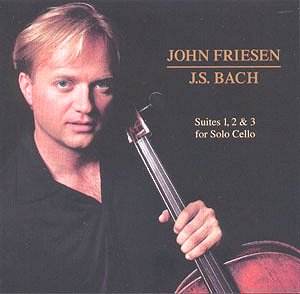
Bach: Cello Suites, BWV 1007–1009
John Friesen, cello
Brilliant Classics (originally released on Sono Records). Recorded 1996, Mushroom Studios, Vancouver. CD.
There’s something dispiriting about hearing Bach’s solo cello suites played with all the technical competence of a conservatory jury exam and none of the spiritual freedom they demand. John Friesen commands a handsome instrument—the bass notes resonate with admirable depth, the upper register sings cleanly enough—but he seems unable to escape the tyranny of the printed page.
Those opening Preludes should breathe. They need to feel like spontaneous outpourings, as if the cellist were thinking through Bach’s architectural genius in real time. Instead, Friesen plants his feet squarely on every beat, marching through these improvisatory movements with the inflexibility of a metronome. The Prelude to the First Suite in G Major, which in Casals’s hands became a kind of manifesto for the expressive possibilities of unaccompanied string playing, here sounds dutiful. Correct, yes. But where’s the risk?
The allemandes and sarabandes fare somewhat better—these dance movements at least allow Friesen to settle into a more lyrical mode. In the Sarabande of the Second Suite, you can hear him beginning to shape phrases with some attention to their emotional contours. But then comes the Allemande of the Third Suite, where his intonation wavers just enough to pull you out of the music’s meditative spell. It’s not catastrophic, but it’s the kind of thing that shouldn’t happen in a commercial recording of works this exposed, this unforgiving.
The faster movements—courantes, gigues—display better control. Friesen’s bowing arm works efficiently through the rapid passages, and his left hand negotiates the fingerboard with reasonable security. Yet even here, something essential is missing. These dances don’t dance. They calculate. The Courante of the First Suite, which should bubble with barely contained energy, feels earthbound. The Gigue of the Third Suite, that glorious perpetuum mobile, never achieves liftoff.
I keep returning to the question of interpretive philosophy. We’re not told what instrument Friesen plays—the liner notes are frustratingly silent on this point—but it’s clearly a modern cello with steel strings, not gut. That’s fine; plenty of cellists have made magnificent Bach recordings on modern instruments. But the choice of equipment ought to inform the approach. If you’re going to use a big Romantic sound, you need either the rhetorical freedom of Rostropovich or the architectural clarity of Fournier. Friesen gives us neither.
The disc itself, made at Vancouver’s Mushroom Studios in 1996, captures the cello’s resonance faithfully, perhaps too faithfully—there’s an acoustic bloom that can blur the articulation in faster passages. The engineering is competent but unremarkable.
One hates to be harsh about a sincere effort, but these suites have been served too magnificently by too many artists to settle for performances this earthbound. Anner Bylsma’s period-instrument recording remains a touchstone for those seeking historical authenticity wedded to interpretive insight. Peter Wispelwey offers similar virtues with even greater technical refinement. For modern-instrument performances, Mischa Maisky and Steven Isserlis both understand how to make these works sing without sacrificing structural integrity.
Friesen’s recording, now reissued on Brilliant Classics at budget price, might appeal to completists or to listeners just beginning to explore these works. But Bach’s cello suites deserve better than competence. They demand—no, they insist upon—a quality of engagement that transforms notes on a page into living, breathing musical thought. That transformation never quite happens here.