Walton’s Later Voice, Handsomely Served
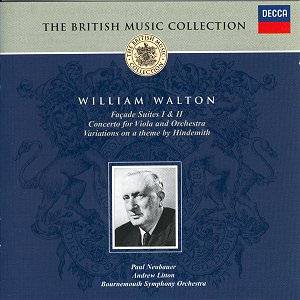
The Bournemouth Symphony under Andrew Litton offers a well-upholstered ride through three faces of Walton—though one might wish for a bit more grit under the fingernails. This mid-price reissue from Decca’s British Music Collection gets the big things right, even if the interpretive temperature runs a degree or two cooler than ideal.
The Variations on a Theme by Hindemith receives the most persuasive advocacy here. Walton composed this work in 1963, just past sixty, when his star had dimmed somewhat in the eyes of critics chasing serial fashions. But there’s nothing tired about this score—it’s one of his finest achievements from the post-war years, a generous tribute to the man who had rescued the Viola Concerto premiere after Lionel Tertis’s legendary rejection. The theme, lifted from Hindemith’s Cello Concerto, gets put through its paces with the kind of orchestral virtuosity that separates the professionals from the merely competent.
Litton’s Bournemouth players prove themselves the former. The articulation is clean, the solo work—and there’s plenty of it—confidently dispatched. Yet something holds back. Perhaps it’s unfamiliarity with the piece; one senses the orchestra hasn’t quite lived with this music long enough to loosen the collar. The interpretation is assured without being entirely unbuttoned, technically accomplished without that final measure of idiomatic ease. Still, Southampton Guildhall’s distinguished acoustic serves the orchestral textures well, and Decca’s engineers have captured the sound with their customary polish.
Paul Neubauer brings agility and intelligence to the Viola Concerto, that troubled masterpiece from Walton’s youth. The balance with orchestra feels absolutely right—no spotlighting, no artificial highlighting of the soloist, just proper perspective. The performance breathes naturally, with a genuine sense of ebb and flow, tension and release. Where Neubauer gives ground is in tonal richness, particularly in the slower music where the viola must sing with a depth that goes beyond mere accuracy. Nigel Kennedy’s EMI album, paired with the Violin Concerto, offers more of that burnished, inward quality the work demands. Neubauer plays the notes beautifully; one simply wishes for more color in the palette.
The Façade suites present a different problem entirely. Litton has assembled his own arrangement from the two instrumental suites, combining and reordering movements according to his own lights. Fair enough—conductors have been doing this sort of thing for decades. But divorced from Edith Sitwell’s wonderfully dotty verses and the wit of two skilled narrators, these pieces lose much of their point. It’s like watching a comedian perform silently—you can admire the physical skill, but where’s the joke? The Bournemouth players execute with polish, relishing their solo opportunities. Whether the music itself justifies the exercise remains, to my ears anyway, questionable. I hope others find more to enjoy here than I do.
A word about the booklet, which is carelessly assembled to the point of insult. Microscopic print for the notes while whole pages sit nearly blank, devoted to nothing more useful than logos and series listings. This sort of thoughtlessness undermines the entire enterprise. CD buyers deserve better—particularly when the solution is so obvious.
The performances, then, are solid rather than essential. Litton and his forces serve Walton handsomely, if without the last degree of passionate advocacy. At mid-price, collectors seeking these particular couplings won’t feel cheated, though neither the Viola Concerto nor the Hindemith Variations receives a definitive reading. Respectable, well-recorded, ultimately a bit safe.