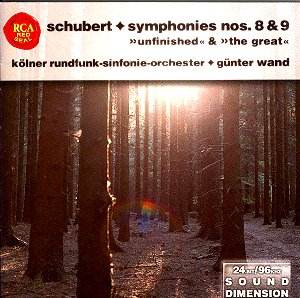
Wand’s Schubert: The Art of Inevitable Rightness
Günter Wand belonged to that vanishing breed of conductors who approached Schubert not as a problem to be solved but as a landscape to inhabit. These performances from the late seventies and early eighties—now reissued at budget price on RCA—reveal something increasingly rare: a performer who has lived with this music long enough to sound as though he’s discovering it afresh each time.
The Unfinished begins with a tempo that feels neither fast nor slow but simply… inevitable. That’s the word that keeps surfacing as you listen to Wand’s Schubert. The cello theme in the first movement emerges with a warmth that never curdles into sentimentality—there’s steel underneath all that lyricism. What sets this reading apart, though, is Wand’s handling of the exposition repeat. Most conductors observe it dutifully, if they observe it at all. Wand makes it essential. When the music descends into the development section the second time through, he holds back the tempo just perceptibly—not enough to disrupt the line, but enough to make those bass tremolandi genuinely ominous. The air thickens. I heard him achieve something similar with the BBC Symphony at the Festival Hall years ago, and the effect stopped breath in the hall.
The ghostly return of this material in the coda has that same uncanny quality. You hear the Cologne strings (captured in serviceable if not spectacular 1980 sound) playing with a transparency that lets every strand of the texture breathe. The second movement receives comparably thoughtful treatment—Wand lavishes care on it without ever becoming precious. The dynamic range is fuller than many modern recordings dare attempt, and the close has genuine power.—The Ninth—the Great C major—presents different challenges. How do you sustain this behemoth without either rushing headlong through it or letting it sag into episodic fragments?
Wand’s solution involves what might be called controlled relaxation. He allows the music room to expand and contract organically, yet never loses the thread. The third movement offers the clearest evidence: the Ländler sways without wallowing, the trios breathe without stopping. Those pointed wind interjections in the second movement have real character—you can hear individual players thinking, phrasing, making musical decisions. The first movement’s notorious coda, which so many conductors treat as a sprint to the finish, here unfolds with proper weight and preparation.
If I have a reservation, it’s that the "finale" could use more earthiness, more peasant vigor in its rustic episodes. Wand’s refinement occasionally works against the music’s deliberate coarseness. But this is a quibble. The overall architecture stands firm, and the Cologne orchestra plays with commitment throughout (those trombones in the "finale"’s chorale passages—properly stentorian).—The 1977–1980 recordings sound their age. There’s some congestion in the loudest passages, a certain flatness to the string tone that better microphone placement might have avoided. But the interpretations transcend the sonic limitations. Wand would record both symphonies again with the Berlin Philharmonic in the nineties—performances of comparable distinction with superior sound—but these earlier accounts have their own validity, their own hard-won wisdom.
At budget price, this disc represents exceptional value. More importantly, it offers Schubert conducting of a kind we don’t often encounter anymore: deeply considered, technically immaculate, yet somehow spontaneous-sounding. Wand understood that these symphonies require both spaciousness and momentum, that their beauty and their drama are inseparable.
The competition in this repertoire remains fierce—Furtwängler’s Ninth, Kleiber’s Unfinished, Abbado’s later cycle all stake legitimate claims. But Wand’s combination of structural clarity and expressive warmth keeps these performances in the highest company. For anyone building a Schubert symphony collection, or anyone who thinks they already know these works too well to be surprised, this reissue demands attention.
Strongly recommended.