
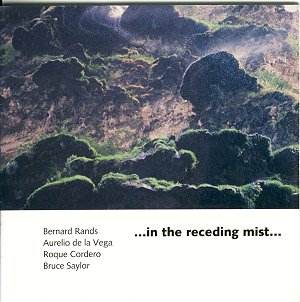
North/South Consonance: Four Americas
Bernard Rands, Aurelio de la Vega, Roque Cordero, Bruce Saylor
North/South Consonance Ensemble; Max Lifschitz
North/South Recordings R 1003 [76:51]
The North/South Consonance series has been quietly documenting a hemisphere’s worth of contemporary music for years now—not always with the polish of major-label releases, but with a curatorial intelligence that puts many better-funded operations to shame. This 1993 collection offers four composers from three generations, bound less by shared aesthetic than by geography and a certain pragmatic modernism that never quite calcified into dogma.
Bernard Rands, the British expatriate who’s made his peace with American academic life, contributes “…in the receding mist…“ from 1988. The Ravel connection—flute, harp, string trio—isn’t just instrumental. There’s that same pleasure in sonority as a thing in itself, though Rands works his material more rigorously than Ravel ever bothered to. Three “tiles,” as the notes have it: a folk-like melody, dotted rhythms, mordent figures. The piece builds with patient accumulation until the flute spins out a long cantilena that feels earned rather than imposed. It’s beautifully done, though I wonder if the very refinement of the thing—all that careful transformation and embellishment—doesn’t sometimes work against the mist and mystery the title promises. Still, the North/South players catch the gossamer textures with real delicacy.
Aurelio de la Vega’s Testimonial (1990) cuts deeper. Here’s a work with genuine moral weight—settings of poems by Armando Valladares, who spent more than two decades in Castro’s prisons. Three songs frame two instrumental movements, and the architecture matters. That ghostly "Scherzo" In Memoriam Alberto Ginastera borrows phrases from the Argentine master’s First Piano Sonata, a gesture of solidarity that never descends into pastiche. But it’s the central "Adagio" that stops you cold: atonal, grief-stricken, and then—astonishingly—a distant piano playing a Cuban danza, nostalgia crystallized into sound. Anne Marie Ketchum’s soprano navigates the vocal lines with conviction, though I’d have welcomed a bit more timbral variety in the upper register. The texts speak of rain, liberty, hope. De la Vega, working in a post-tonal idiom that never loses touch with Cuban dance rhythms, gives them music that honors both their anguish and their defiance.
Roque Cordero’s Dodecaconcerto (1990) is the surprise here—a work of such rhythmic vitality and coloristic punch that comparisons to Revueltas aren’t hyperbole. Twelve players, three movements following more or less traditional patterns, but the energy is pure Latin American modernism: spiky, exuberant, never quite settling into predictability. The sonata-"allegro" opening throws off sparks; the slow movement actually sings; the "rondo" "finale" kicks like a mule. This is serial mastery put to work rather than displayed for inspection, and the North/South ensemble plays it with infectious gusto. Why isn’t more of Cordero’s music available? The violin concerto from the LP era deserves resurrection.
Bruce Saylor’s See You in the Morning (1987) closes the disc—a song cycle on poems by African-American women, written for Jessye Norman though apparently never performed by her. Constance Beavon handles the mezzo part with intelligence if not always with the timbral richness the music seems to want. The settings move from wistful to humorous to hopeful, ending with lines about justice and hope as twin flowers. Saylor writes an accessible, lyrical modernism that wears its craft lightly—perhaps too lightly for some tastes, but the directness serves the texts well.
Max Lifschitz holds this disparate program together with sure-handed musicianship, and the recorded sound from Albany’s Recital Hall captures the instrumental balances clearly if without much bloom. Not a disc for those seeking sonic opulence, then. But for anyone interested in where American contemporary music actually lived during the late 1980s and early 1990s—not in the manifestos but in the scores themselves—this collection offers substantial rewards. The de la Vega and Cordero alone justify the price of admission.
