# Tennstedt’s Mahler: The Authority of Long Acquaintance
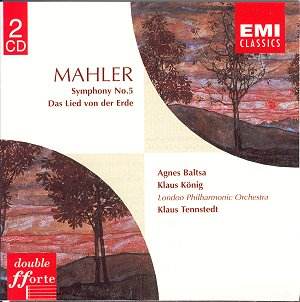
The reissue of Klaus Tennstedt’s 1978 Fifth Symphony and his somewhat troubled 1982–84 Das Lied von der Erde arrives without fanfare—which is itself curious, given that these recordings represent one of the great Mahler partnerships of the late twentieth century. Tennstedt and the London Philharmonic forged something rare in those years: a sustained interpretive relationship that deepened rather than calcified.
The Fifth opens with a trumpet call that manages to sound both ceremonial and threatening. This is no mere military flourish—the LPO’s principal catches that peculiar Mahlerian quality of grandeur already infected by doubt. The crescendo builds with what I can only call architectural logic, each instrumental layer adding weight until the full orchestra crashes in. Then those lamenting strings: Tennstedt shapes them with a director’s knowledge that this funeral march must contain multitudes. Grief, yes, but also rage, and underneath it all a kind of exhausted irony.
What strikes me most forcefully in the second movement is Tennstedt’s refusal to indulge in what one might call “interesting” tempos. He simply lets Mahler’s marking—“With the utmost vehemence“—mean what it says. The music accumulates its own momentum, and when those first hints of the chorale emerge, they feel earned rather than imposed. The ebb and flow here suggests a conductor who understands that intensity isn’t volume, that vehemence can whisper.
The "Scherzo" finds the LPO horns in particularly fine form—that notorious opening solo rides the rhythm rather than fights it, which is exactly right. Mahler’s metronome marking has caused conductors endless anxiety, but Tennstedt trusts the dance element, lets the Ländler lilt even as the orchestration grows increasingly Byzantine. Only in the coda’s final climax does the recording show its age: a certain congestion in the brass, the strings not quite cutting through as they might. Fair enough. Mahler piles on the instruments here with almost reckless abandon, and 1978 technology has its limits.
Then the Adagietto. How many thousands of words have been wasted on this movement? Tennstedt takes it slowly—perhaps too slowly for some tastes—but the string sound remains taut, never sentimental. The dynamic shadings are exquisite, particularly in those moments where Mahler reduces the texture to almost chamber-music intimacy. This is music that can suffocate under its own beauty, but Tennstedt aerates it, finds air between the phrases.
The "Rondo"-"finale" bounds in with infectious energy, its principal theme bouncing along with the kind of momentum that makes you forget how difficult this music actually is to play. The LPO’s execution is nothing short of virtuosic—those rapid string figurations, the woodwind chatter, the brass interjections all lock together with balletic precision. When the chorale finally blazes forth in its full glory, complete with those subtle motivic echoes from the second movement, Tennstedt drives it home with conviction.
But—and here I must register a reservation—something is missing in those final pages. The triumph feels a bit manufactured, the brass chorale slightly too literal. Barbirolli, in his EMI recording, found a quality I can only describe as transfigured: the same notes, yes, but somehow transformed into something beyond mere orchestral splendor. Tennstedt gives us magnificence. Barbirolli gave us transcendence. It’s an unfair comparison, perhaps, but at this level of music-making, such distinctions matter.
Das Lied von der Erde presents different challenges, and apparently Tennstedt himself had doubts about this recording. Listening now, his reservations seem excessive—though one can perhaps understand them. Klaus König’s tenor has a certain strain to it, particularly in “Das Trinklied vom Jammer der Erde,” where the vocal line sits uncomfortably high and the tessitura offers no respite. But is this entirely a flaw? The text speaks of earth’s sorrow, of wine that cannot ease existential dread. König’s strained intensity serves the music, even if it doesn’t always serve conventional notions of luminous singing.
Agnes Baltsa is another matter entirely. Her mezzo has that particular dark-hued richness that this work requires—not the contralto depths of a Ferrier or a Ludwig, but something more supple, more overtly expressive. In “Der Einsame im Herbst” (“The Lonely One in Autumn”), she shapes the phrases with a kind of autumnal melancholy that never tips into self-pity. The album captures her voice in ideal balance with the orchestra; one hears both the individual timbres and the blended sonority.
Tennstedt’s conception of Das Lied is unabashedly symphonic. This is no song cycle with orchestral accompaniment—it’s a symphony that happens to include voices. The inner movements reveal this approach most clearly: “Von der Jugend” (“Of Youth”) and “Von der Schönheit” (“Of Beauty”) receive full orchestral weight, even as Tennstedt maintains the chamber-music delicacy that Mahler’s scoring demands. Those mandolin flourishes in “Von der Jugend” ping through the texture with wonderful clarity; the oboe solo in “Von der Schönheit” floats above the strings like something glimpsed through water.
“Der Abschied” runs thirty-one minutes—nearly half the work’s total duration—and maintaining tension across that span requires both structural understanding and sheer nerve. Tennstedt has both. He paces the movement like a great dramatist, knowing when to press forward and when to let the music simply breathe. Baltsa rises to the occasion magnificently; her final “Ewig… ewig…” doesn’t so much fade as dissolve, the voice becoming one with the orchestral texture until you can’t quite distinguish singer from celesta from flute.
The EMI recording, engineered at Abbey Road’s No. 1 Studio, captures the LPO’s sound with both clarity and warmth—no small achievement given Mahler’s fondness for what amounts to multiple chamber orchestras operating simultaneously. Simon Gibson’s digital remastering has brought out details that probably weren’t audible in the original LP pressings: the snap of the harp in “Von der Schönheit,” the particular bite of the trumpets in the Fifth’s opening movement.
Issuing these performances together makes commercial sense, though artistically they’re rather different