Muti’s Dvořák and Tchaikovsky: Abbey Road Splendors from the Mid-Seventies
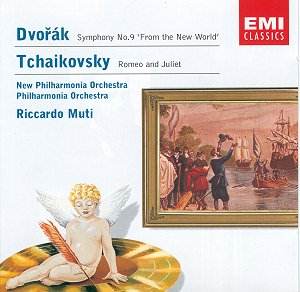
There’s something to be said for the way EMI recorded at Abbey Road in the mid-1970s—a warmth and bloom that digital clarity often sacrifices. These performances, captured in 1976 and ‘77, possess that inviting sonic character, and Riccardo Muti, then still in his thirties and conducting the Philharmonia (or New Philharmonia, as the corporate reshuffling had it), brings an intensity and precision that makes this budget reissue far more than a stopgap.
The New World Symphony receives a reading of considerable power. Muti doesn’t sentimentalize Dvořák’s nostalgia—there’s steel in those opening cellos and basses, a genuine sense of foreboding rather than the picturesque travelogue some conductors offer. What strikes me most forcefully is the attention to interior voicing: those horn calls in the first movement’s development section emerge with startling clarity, and the winds throughout maintain an individual character that suggests real chamber music sensibility even in the tutti passages.
The "Largo"—well, here’s where things get interesting. Muti takes it at a flowing tempo that some will find too brisk, but it breathes naturally, avoiding the treacly stasis that can make this movement interminable. The English horn solo (beautifully played, though the player goes uncredited in these reissue notes) has a burnished quality, slightly reedy in the best sense. Those hushed string chords that frame it possess an almost Brahmsian depth. Only in the "Scherzo"’s Trio does Muti’s literalism become slightly problematic—the dance loses some of its lilt, becomes a touch earthbound. But the main "scherzo" section crackles with energy, and the "finale"… the "finale" is genuinely thrilling.
That string bite at the opening of the last movement—it’s ferocious without being coarse. The Philharmonia strings in this period had a particular edge, a focused intensity that later orchestras, for all their technical polish, sometimes lack. Muti drives the movement forward with inexorable logic, and when those brass fanfares blaze out, the album captures both their power and their placement in the sonic landscape. The perspective is natural, never spotlit.
Romeo and Juliet receives an Italianate reading, which seems appropriate enough. Muti understands the opera-that-never-was quality of this score, its theatrical gestures and passionate outbursts. The opening Friar Laurence music emerges with genuine pianissimo—none of that mezzo-piano masquerading as soft playing—and the chorale voicing is exquisite. When the violence erupts, it does so with real shock value.
The love theme… here Muti takes risks. He lingers over phrases, lets the strings swell and recede with considerable freedom, yet never loses the line’s essential shape. Some will find it too interventionist, too manipulated. I found it compelling, even moving. The climaxes build organically rather than through brute force, though when force is needed—those clashing sword motifs—the orchestra delivers.
If there’s a weakness, it’s in the closing pages. That timpani heartbeat could be more clearly etched, more physically present. The final chord, however, lands with appropriate finality, a real sense of tragic closure rather than mere conclusion.
The recorded sound throughout both works shows what analog tape at its best could achieve. There’s air around the instruments, a sense of Abbey Road’s acoustic space that digital recordings often flatten out. The warmth doesn’t mean mushiness—detail remains clear, and the dynamic range is impressive. When Muti wants fortissimo, you get fortissimo, not the compressed loudness that mars so many recent releases.
At budget price, this disc offers remarkable value. Muti’s interpretations are thoroughly prepared, thoughtful without being overthought. The Philharmonia plays with distinction, and the coupling makes musical sense—two Slavic masterworks from roughly the same period, both grappling with questions of national identity and emotional directness.
Are these the only recordings of these works you’ll need? Perhaps not—the catalogue offers plenty of alternatives, and personal taste will always play its role. But this reissue deserves serious consideration, particularly for those who value interpretive substance and genuine orchestral character over mere sonic spectacle. Buy it while EMI keeps it in print, which with their deletion policies is never a certainty.